The Netflix documentary Plastic Detox is sparking debate worldwide. The documentary establishes a clear link between exposure to certain chemicals in plastics, such as BPA and phthalates, and effects on human health and fertility.
That raises questions. What does this mean for the packaging that KIVO produces? How is this being handled in Europe? And what role do legislation, food safety and material development play?
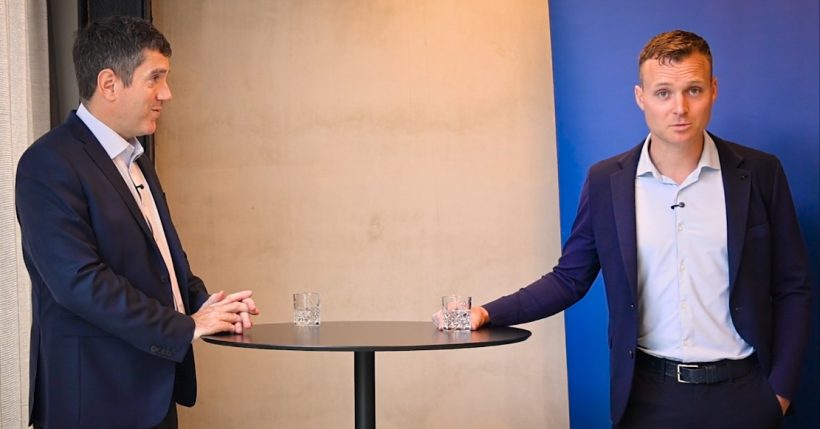
We discussed this with Alex Bond, R&D Engineer at KIVO Plastic Verpakkingen. Drawing on his daily work with raw materials, formulations, food safety and European regulations, he shares his perspective on the documentary and the technical reality behind flexible packaging.
“The documentary touches on an important subject”
According to Alex, it touches Plastic Detox a subject that must be taken seriously. The documentary shows that certain substances, such as BPA and phthalates, can have a negative impact on health and fertility.
“Those are substances that have now been scientifically proven to be able to have harmful effects when exposed to levels above certain thresholds. It is therefore logical that a critical eye is being cast on them.”
At the same time, he makes an important caveat.
“The documentary is set in the United States. Fortunately, the European situation is different. Within Europe, materials for food contact have been assessed for years within a strict legal framework. This involves looking not only at the presence of a substance, but primarily at the actual exposure and the risk.”
According to Alex, it is important to distinguish between hazard and risk. A substance may have certain properties, but that does not automatically mean it poses a risk to consumers under all circumstances.
BPA and phthalates do not occur in KIVO films
An important part of the documentary is about BPA and phthalates. BPA is used in certain hard plastics, while phthalates are best known as plasticisers that make materials flexible.
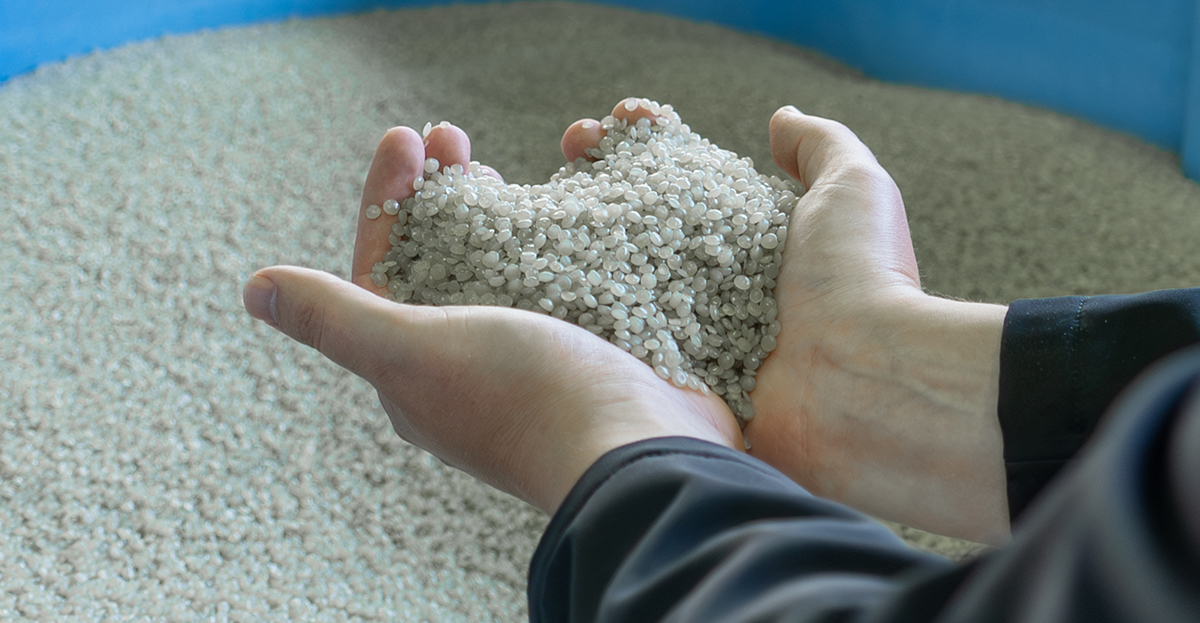
These substances are not part of the recipe for the flexible packaging that KIVO produces.
“We do not use BPA or phthalates in the packaging we produce. In addition, we ask every supplier for declarations confirming that these substances are not present in the raw materials we use.”
Before a raw material is used, it is assessed on the basis of European legislation and food safety requirements. This involves looking at the complete composition, application possibilities and regulatory compliance for various markets worldwide.

Europe leads the way in regulation
According to Alex, an important difference between the situation in the documentary and European practice lies in the regulations.
Europe works with comprehensive legislation such as REACH, EFSA guidelines and specific food contact regulations. Only substances that have been extensively assessed may be used within food contact materials.
“Europe takes a preventative approach. Substances are assessed first before they may be used. That differs from the American approach, which in many cases is less strict.”
Additional legislation will be added in the coming years. The Packaging and Packaging Waste Regulation (PPWR) places extra emphasis on recyclability, material reduction and further restricting substances of concern in packaging.
For Alex, that is a positive development.
“New regulations ensure that the whole sector continues to innovate. It keeps producers focused on safety, circularity and material usage.”
What does migration actually mean?
The documentary suggests that substances from packaging can end up in food. That process is known as migration.
Migration is an extensively researched and controlled component of food safety within Europe. Packaging is tested with various food simulants, such as oil, ethanol and vinegar, which mimic different types of food.
Under standardised conditions, it is then measured which substances may migrate from the packaging into the simulant. These results are compared with legal migration limits established on the basis of scientific risk assessments.
“Safe within limits means that exposure remains well within the limits established by European authorities. This is not assumed, but actually tested.”
Recyclate and food safety go hand in hand
Recyclate also frequently comes up in discussions about packaging and health. In this context, there is sometimes a lack of clarity regarding the differences between various types of recycled raw materials.
For direct food contact, Post-Consumer Recyclate (PCR) is not used in flexible food packaging. The reason for this is simple: the origin of the material is not always fully traceable.
“With PCR, you do not always know the exact applications the material has had in a previous life. As a result, unknown contaminants may be present.”
KIVO therefore chooses a different approach. Through KIVO Recycling, Post-Industrial Recyclate (PIR) from a controlled and traceable closed loop is used. Because the origin of the material is known, it can be reused under strict conditions where legislation permits.
This focus on controlled material flows aligns with Kivo's broader vision of circularity and supply chain collaboration. The goal is to develop packaging with the lowest possible environmental impact, without compromising on food safety or functionality.
Plastic isn't always the problem
One of the most discussed topics from the documentary is the call to avoid plastic as much as possible. According to Alex, however, that is not always the most sustainable solution.
“Plastic is often judged on visibility. But if you look at weight, material use, transport impact and food waste, plastic turns out to be a highly efficient solution in many applications.”
A well-known example is the plastic wrap around cucumbers. Although this packaging is frequently cited as an example of superfluous plastic, it serves a clear function within the supply chain. A film of about 12 microns, or 0.012 millimetres, can extend the shelf life from a few days to roughly two weeks. As a result, food waste during transport and distribution is greatly reduced.
At the same time, this touches on a broader question: if as a society we truly want to use less plastic, this also requires something of our consumer behavior. Wanting to eat year-round products that are not locally available means that these products often have to be transported over greater distances. Within those supply chains, packaging is regularly necessary to maintain quality and shelf life. Using less plastic therefore cannot be seen in isolation from choices surrounding seasonal eating, local production and shorter supply chains.
“The question should not only be whether plastic is used, but also why it is used. Sometimes less packaging is possible. Sometimes using less plastic actually requires a different way of producing, distributing and consuming.”
Material reduction as a starting point
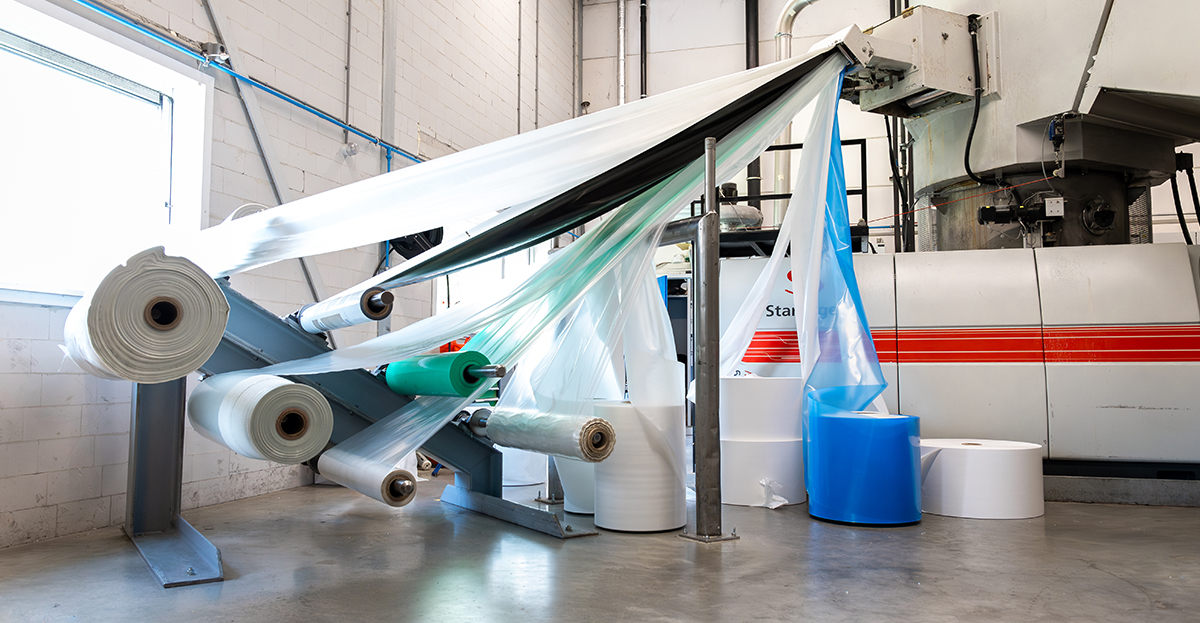
Precisely why KIVO has focused on gauge reduction for years. By making packaging increasingly thinner, less material is used while functionality is maintained.
This approach directly aligns with the objectives of the PPWR, in which packaging minimisation plays a major role. The new regulations require producers to further optimise packaging and prevent overpackaging.
“The most sustainable packaging is often not the packaging that is replaced by another material, but the packaging that does exactly what is needed with as few raw materials as possible.”
Innovation under the influence of the PPWR
The arrival of new regulations also brings technological challenges. For example, KIVO is actively working on alternatives to additives that will come under pressure under future regulations.
An example of this is PFAS-containing processing aids that were used in the past to optimise production processes.
“The regulations are forcing us to develop new solutions. That takes time and research, but ultimately it leads to better and future-proof packaging.”
According to Alex, that is precisely what innovation within the packaging industry is all about: constantly searching for the right balance between functionality, food safety, recyclability and environmental impact.
A nuanced view on plastic
The main conclusion that Alex from Plastic Detox states that the debate on plastics benefits from nuance. At the same time, KIVO believes it is important that this documentary was made. The film contributes to awareness and puts a socially relevant subject on the agenda. Therefore, we recommend that everyone watches the documentary.
As a producer of flexible packaging, we are acutely aware of our role in this public debate. That is precisely why we want to clearly explain the choices we make, the substances we do not use, and how European legislation, food safety, and material development come together in practice.
Yes, there are substances whose health effects are known. Yes, there are challenges surrounding microplastics and circularity. But at the same time, extensive legislation, continuous innovation and a growing focus on safe and recyclable packaging exist in Europe.
For KIVO this means continuing to invest in material reduction, safe raw materials, recyclable packaging and circular solutions that meet the demands of today and tomorrow.
“Plastic is not an end in itself. It is a material. Our task is to ensure that it is used in a safe, efficient and future-proof way.”
That is precisely the challenge facing the packaging industry in the coming years. And where innovation, regulation and science are converging ever more closely.