The coefficient of friction of bread bags, also referred to as coefficient of friction or COF, helps determine how smoothly bagloader bags are processed through an automatic bread-packaging machine. For industrial bakeries, a stable coefficient of friction is important because it affects the feeding, opening and processing of the bag.
When the friction is not properly adjusted on the packaging machine, bags may separate less easily from each other, open with more difficulty, or be fed irregularly. Especially on high-speed lines, this can lead to machine stoppages, product loss and waste of packaging material.
Therefore, when looking at automatic bread bags, one must consider not only film thickness or price, but the combination of coefficient of friction, lay-flat properties, thickness tolerance, antistatic properties, perforation and seal strength.
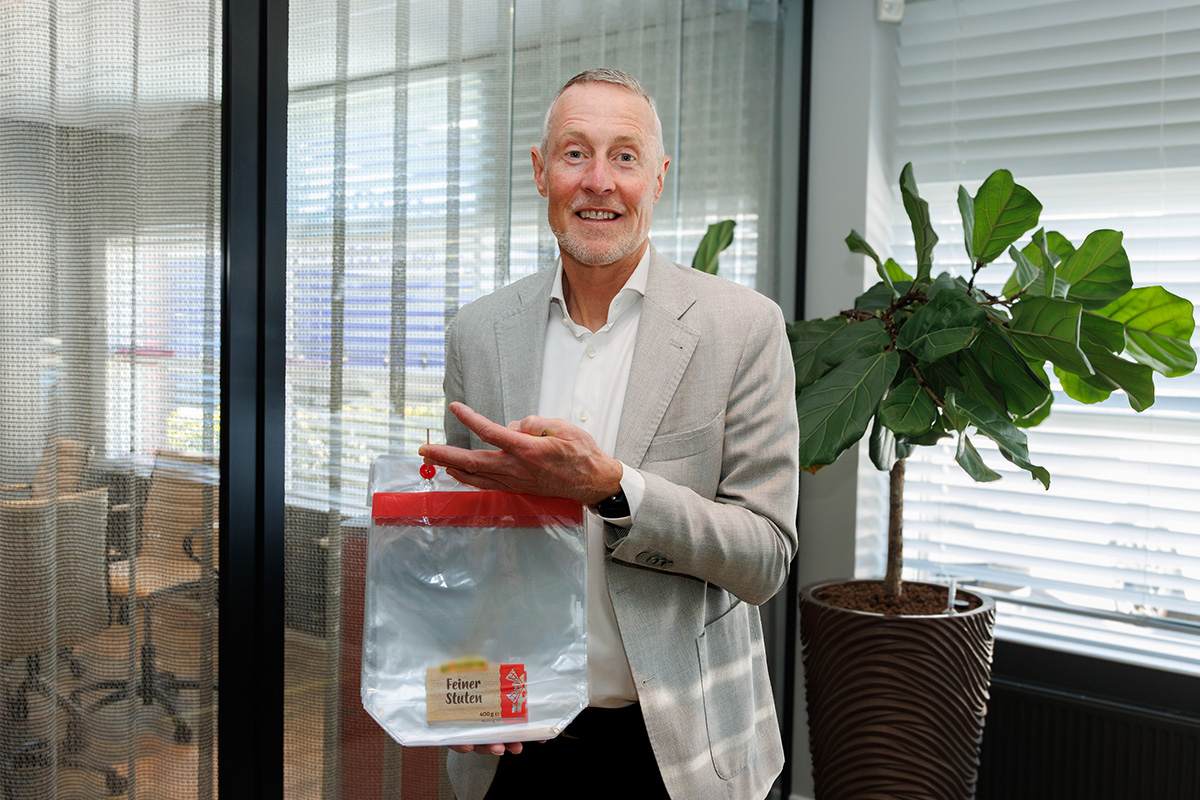
What is the coefficient of friction of a bread bag?
The coefficient of friction indicates how much resistance is created when two surfaces move past each other.
With an automatic bread bag, that could involve, for example:
- film moving along film;
- a bread bag being guided over machine parts;
- bags that need to be separated from each other during opening.
The correct value is not the same for every situation. The desired properties depend, among other things, on the type of bag, the packaging process and the packaging machine used.
For an industrial bakery, consistency is especially important. Every bag must behave as predictably as possible during a production run.
Why is the friction coefficient important for baggage loaders?
Bagloaders are used on automated packaging lines where large quantities of bread are packaged one after another. On such lines, bags are continuously fed, opened, filled and separated from the wickel.
If the film reacts differently each time, the continuity of the packaging process may be reduced.
A poorly tuned or inconsistent coefficient of friction can lead to, amongst other things:
- bags that stick together;
- bags that do not open fully;
- irregular feed towards the packaging position;
- problems at higher machine speeds;
- extra corrections by operators;
- more machine stops;
- wastage of bread or packaging material.
The coefficient of friction is therefore not a standalone laboratory value. It is a film property that can directly contribute to the runnability of a bread packaging line.
What does runability mean for bread bags?
Runability describes how reliably and stably packaging material can be processed on a packaging machine.
With bag loader bags, good runnability means, for example, that the bags:
- be correctly adduced;
- easy to open;
- lying stably on the stirrups;
- being separated at the right moment;
- perform consistently during longer production runs.
For industrial bakeries, this is important because a packaging line must not only be able to run quickly, but also maintain that speed over a longer period of time.
A theoretically high machine speed is of little value when the line has to be stopped regularly to correct incorrectly opened or incorrectly fed bags.
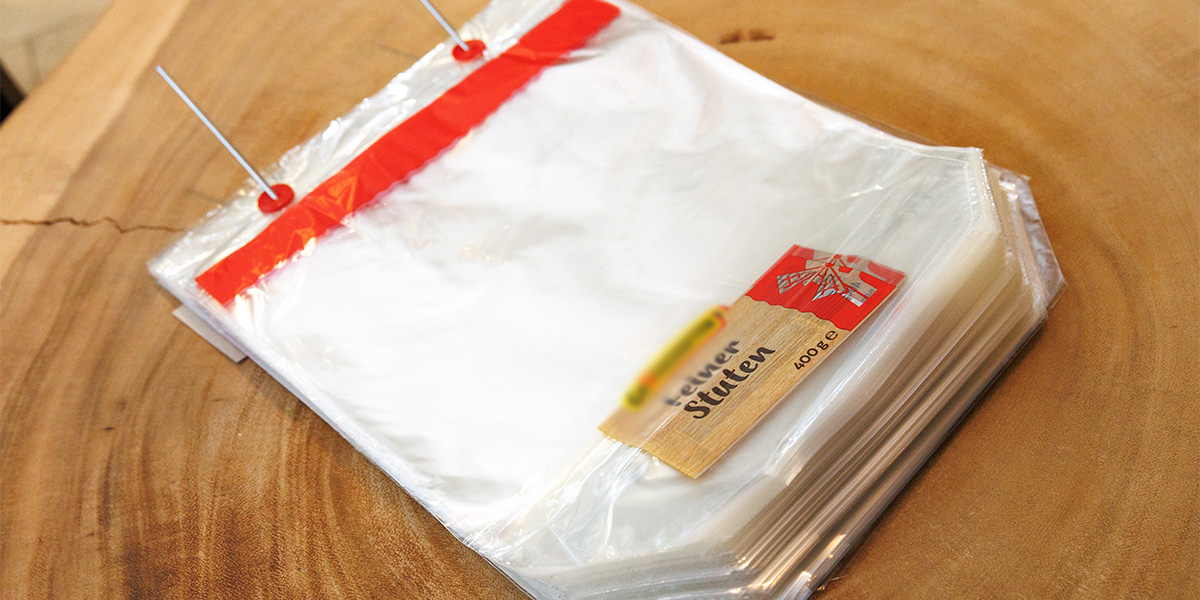
Which properties determine the runability of bread bags?
The coefficient of friction is just one of the properties that affect the processing of a bread bag.
Flatness of the bread bag
A bag loader bag must lie as flat and predictably as possible on the bracket. When bags deform, curl up or are not positioned correctly, this can affect the feed and opening on the packaging machine. Flatness is therefore especially important in automatic packaging lines with high production speeds.
2. Thickness and thickness variation of the film
When it comes to bread bags, it is not just the average film thickness that is important; the thickness tolerance also counts. This refers to how evenly the thickness is distributed across the film. For example, packaging may meet the agreed micron value on average, while certain parts of the film are thinner or thicker. An even thickness distribution ensures more predictable behaviour during processing and sealing. This becomes even more important when the thickness of a bread bag is reduced.
3. Anti-static properties
Plastic film can build up static electricity during production and processing. As a result, bread bags can stick together or be less easy to open. Antistatic properties help to control this effect and support stable processing of the bags on automatic bread-packing machines.
4. Strength of the side seals
The side seals of a bread bag must be strong enough to keep the bag intact during production, transport, packaging and use. At the same time, the seals must be consistent. Variation in seal strength can lead to undesired failures during the packaging process.
5. Puncture of the bag loader bag
A bag loader bag must be able to be separated from the bracket at the right moment. The perforation must therefore not be too strong, but also not so weak that bags tear off prematurely. Reproducibility is also important here: every bag should react in the same way as much as possible.
Why do film properties become more important at high machine speeds?
The higher the speed of an automatic bread packaging machine, the smaller the margin for error becomes.
At a lower speed, a small variation in film properties can sometimes be accommodated by the machine or operator. At high production speeds, the same variation can occur repeatedly and lead to major disruptions.
Therefore, for industrial bakeries, the combination of the following is particularly important:
bread bag + bread type + machine + machine speed.
A bag that functions well on one packaging line does not automatically have to deliver the same performance under every other setting.
How does film thickness affect the performance of a bag loader?
A thicker bread bag is not automatically a better bread bag. The required film thickness is determined by, among other things, the type of bread, dimensions, mechanical stress, desired protection and processing on the packaging machine.
As a result, for certain applications, it can be investigated whether the film thickness can be reduced. This is also known as downgauging or gauge reduction. The goal here is not simply to make a bag as thin as possible. The aim is to use as little material as possible while retaining the necessary properties.
Within KIVO's sustainability approach, this falls under Reduce: gauge and format reduction. At the same time, functionality remains an important prerequisite.
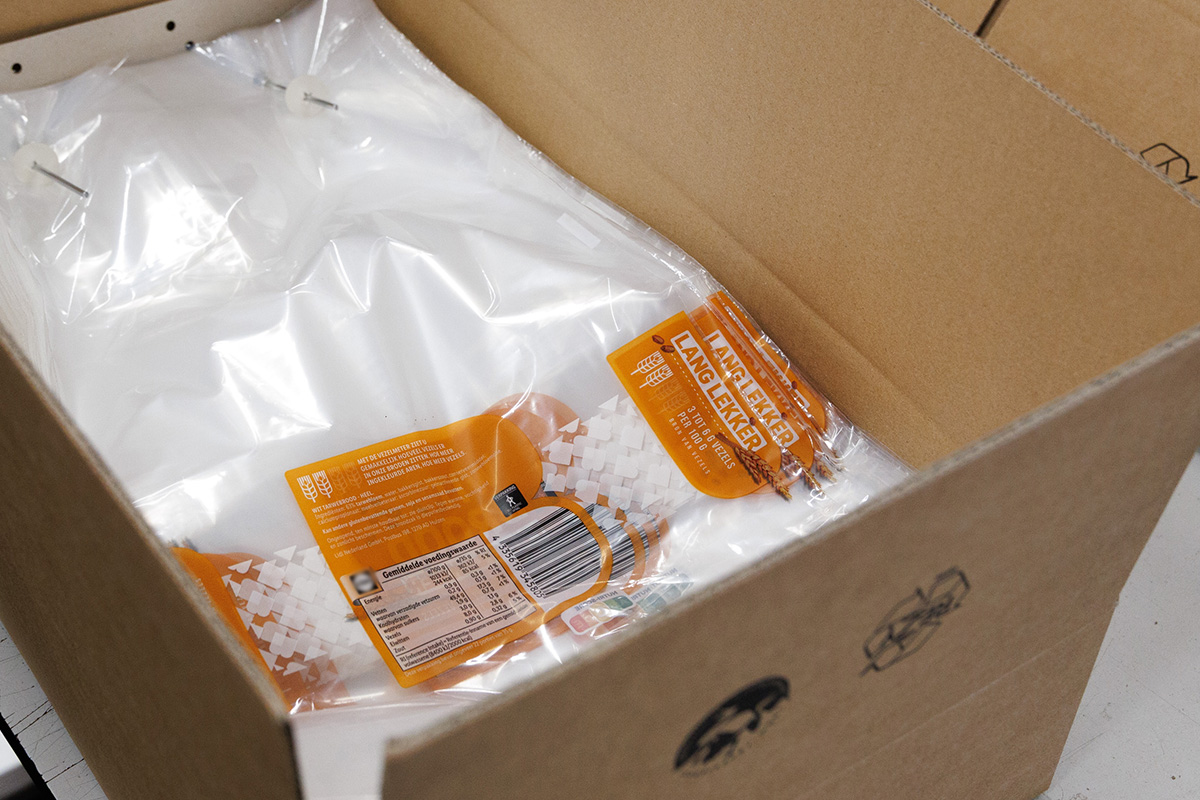
Can a thinner bread bag be more sustainable?
Yes, provided the bread bag retains its function and processability. By using less plastic per bag, the amount of material used per packaged unit can be reduced. However, if a thinner film leads to more machine stoppages, torn bags or bread waste, some of those gains may be lost.
Therefore, gauge reduction must always be technically validated on the packaging line in question.
So the relevant question is not:
“How thin can we make this bread bag?”
However:
“What is the minimum amount of material required for this bread bag to continue to function reliably?”
This approach is also in line with the PPWR. The European Packaging and Packaging Waste Regulation requires that packaging be minimised in terms of weight and volume, whilst continuing to fulfil its necessary packaging functions.
Which bread packaging machines handle bag loaders?
Automatic bread bags are processed, amongst others, on machines from:
- Hartmann;
- BSE.
When specifying a bread bag, it is therefore important to know on which type of machine and under what process conditions the bag will be used.
Dimensions alone are not enough. The properties of the film and the way in which the bag is manufactured also play a part.
How can you reduce machine downtime caused by bread bags?
Reducing machine downtime starts with checking whether the packaging material fits the machine consistently.
In the event of faults, it is therefore advisable to check, among other things:
- coefficient of friction;
- flatness;
- dictation spread;
- anti-static properties;
- perforation;
- seal strength;
- machine speed;
- packaging machine settings;
- variation between different batches of foil.
By assessing these factors together, it is easier to determine whether the problem stems from the packaging, the machine settings or a combination of both.
What does an industrial bakery need to consider when purchasing bread bags?
When purchasing automatic bread bags, it is advisable not to base your comparison solely on the price per thousand bags or the micron rating.
Please note:
- Runability
- Can the bag be processed reliably over the long term on the existing packaging line?
- Constant madness properties
- Are its friction, thickness distribution and mechanical properties reproducible across production runs?
- Flatness
- Do the bags remain correctly positioned on the bracket?
- Antistatic performance
- Do the bags open reliably during automated processing?
- Puncture resistance and seal strength
- Can the bag be separated in a controlled manner without any unwanted tears?
- Options for downgauging
- Can material be reduced without loss of functionality?
- Compatibility with the packaging machine
- Is the bag technically compatible with, for example, a Hartmann or BSE line?
- What is more important: a cheap bread bag or a bread bag that is easy to process?
For an industrial bakery, the costs of a bread bag must be considered in relation to the total packaging process.
A small difference in packaging costs can be less relevant when a film leads to more downtime, lower line speeds, additional operator interventions or more product waste. Therefore, it is more useful to look at the overall performance on the packaging line than solely at the price of the bag.
A well-adjusted bag loader contributes to a stable production process and helps to limit the waste of both packaging material and bread.
How does KIVO optimise bread bags for automated packaging lines?
In the development and optimisation of bag loaders, KIVO looks at the combination of material usage, technical film properties and processing on the packaging machine. The following factors play a role, among others:
- bread type;
- packaging format;
- film thickness;
- machine speed;
- packaging machine type;
- coefficient of friction;
- anti-static properties;
- flatness;
- perforation and seals.
The premise is that sustainability and functionality must be assessed together. This aligns with KIVO’s sustainability proposition, in which material reduction, technical performance and minimal downtime are considered collectively.
Frequently asked questions about bag loaders and automatic bread-bagging machines
What is a bag loader?
A bagloader is a bread bag supplied on a wicket and automatically opened and filled by a bread packaging machine. Bagloaders are therefore also referred to as wicketed bags or bagloader bags.
Why do bread bags sometimes not open properly on the packaging machine?
This can have various causes. Film properties such as coefficient of friction, static charge and lay-flatness can have an influence, but machine settings and process conditions also play a role.
What does COF mean for plastic bread bags?
COF stands for coefficient of friction, or frictional coefficient. The value describes the resistance between two surfaces moving past each other. In bag loaders, this property influences, among other things, the feed and separation of bags.
Optimising bread bags for reduced material usage and stable processing
An automatic bread bagger is a relatively small component of an industrial production line, but its technical characteristics can have a major impact on the continuity of the packaging process.
Especially at high production speeds, a stable coefficient of friction, good flatness, consistent thickness distribution, antistatic properties, and reliable perforation are important.
At the same time, there is a growing focus on reducing material usage.
Therefore, the best solution is not automatically the thickest or thinnest bread bag, but a bag loader that continues to function reliably on the packaging machine in question using as little material as possible.
Would you like to investigate whether your current bread bag can be optimised? Together with your bakery, KIVO can review the current film thickness, bread type, packaging machine and process conditions to identify potential improvements in material usage and runability.


 info@kivo.nl
 +31 (0) 299 39 88 00