When choosing packaging, people often look at the price per kilo or per item. In practice, that says very little about the actual costs. Total Cost of Ownership (TCO) provides a much more realistic picture, because it takes into account all costs that arise during production, logistics and use.
For businesses with automated packaging lines, the greatest savings rarely lie in the material price per kilo, but rather in process optimisation.
1. Material usage and efficiency
The most visible cost item is the material itself. Yet this is where there is immediate potential for optimisation:
- Oversizing of film (too thick or too large)
- Unnecessary safety margins
- Cutting waste and offcuts
Thickness reduction can often reduce material usage by 5–15%, provided that performance is maintained.
Machine downtime and stoppages
One of the largest hidden cost items is downtime:
- Paper jams
- Poor seal performance
Every minute of downtime means a loss of output, capacity and efficiency. Film, for example FFS film, which is better aligned with the machine, can significantly reduce these costs.
3. Role changes and production halts
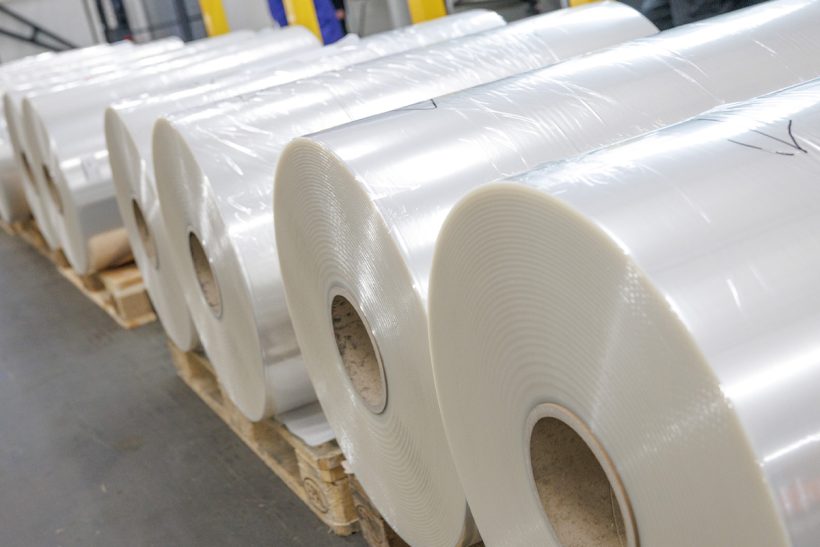
The length and structure of film reels have a direct impact on the line:
- More metres per roll = fewer roll changes
- Fewer stops = higher output
The difference between standard and optimised routes can save dozens of stops a week.
4. Runnability and processability
Foil must not only be technically sound, but also perform consistently:
- Stable web guiding
- Constant thickness
- Predictable sealing behaviour
Poor runnability leads to minor disruptions that accumulate into lower efficiency.
5. Packaging tax and waste management contribution
In many European countries, including the Netherlands, companies pay a fee for the amount of packaging material they put on the market. These costs are directly linked to the weight and increasingly also to the recyclability of the packaging.
Consider:
- Waste management contribution (e.g. via Verpact in the Netherlands
- Tariff differentiation based on recyclability
- Future costs from PPWR the EPR regulations
In practical terms, this means:
- More material = higher structural costs
- Poorly recyclable packaging = higher fees
- Non-compliant packaging = future financial risk
Thickness reduction and recyclable design therefore not only impact material consumption, but also directly affect annual costs.
Transport and logistics
Film on a roll is logistically more efficient than pre-formed packaging:
- More metres per pallet
- Fewer transport movements
- Lower storage costs
This has a direct impact on both costs and CO₂ emissions.
7. Waste and disposal
Waste streams incur costs:
- Cutting waste
- Rejection
- Processing fees
Lower material usage and better process stability lead to less waste.
Conclusion
The true cost of packaging does not lie in the price of the film, but in the big picture of material, machine and process. Companies that focus on TCO rather than unit price achieve structural savings and more stable production.
Curious to know where the biggest savings can be made in your packaging process? Get in touch with one of our specialists and discover the possibilities.