Symbols & certificates
19 March 2020

What is the Blauer Engel seal of approval?

The Blue Angel seal of approval has existed since 1978 and is an official German eco-label, similar to the Dutch milieukeur. When a product has the ''Der Blauer Engel'' label, it scores lower on key environmental aspects than similar products.

See here An example of the "Der Blauer Engel" seal of approval certificate.
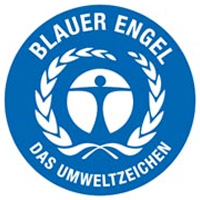

Symbol of the "Der Blauer Engel" seal of approval.

There are now some 11,500 products and services worldwide with the ''Der Blauer Engel'' seal. The symbol of the label states the reason why the product is less harmful to the environment than similar products. This can be ''energy-saving'', for example.

The label has labels for 5 categories, these are:

  1. Home and Living
  2. Paper and Printing
  3. Electric Devices
  4. Construction and Heating
  5. Business and Municipality

film with the Blue Angel seal of approval

KIVO has got the seal of approval in ''Paper and Printing''. We are proud to announce that with our potting soil film comply with the conditions list for plastic packaging within that category: DE-UZ 30a.

To obtain the label, your product must meet a number of requirements. For example, the film include at least 80% Post Consumer Recyclate and are free of harmful substances.

Read also: What is PCR plastic?

Questions about the Blauer Engel seal?

Then contact one of our experienced employees using the contact form below. You will then receive a response as soon as possible.
Team Image

A packaging question? Our experts are here to help.

Our experts are happy to help you find a packaging solution that suits your product, process and sustainability goals.

Speak to an expert
Question Image

Answers
to frequently asked questions

Discover answers to frequently asked questions about our sustainable packaging solutions and services.

Frequently asked questions
Written by
Theo Schilder Director of Business Development
Specialising in flexible packaging and PPWR guidelines.
View all articles by Theo

"*" indicates required fields

This field is for validation purposes and should be left unchanged.
First name and surname**
Drop files here or
Accepted file types: pdf, doc, docx, xls, xlsx, csv, txt, jpg, jpeg, png, gif, webp, ai, eps, Max. file size: 10 MB, Max. files: 5.
    Up to 5 files, 15 MB in total. Allowed: PDF, Word, Excel, images and design files (ai, eps). Files are checked for viruses.

    We are happy to help
    get in touch

    We actively contribute to providing high-quality, sustainable plastic packaging and place great value on open communication with our customers, suppliers, and partners. Whether you have questions about our products, want to learn more about our sustainability initiatives, or are interested in a collaboration, we are ready to assist you.

    Team Image

    A packaging question? Our experts are here to help.

    Our experts are happy to help you find a packaging solution that suits your product, process and sustainability goals.

    Speak to an expert

    See also

    What is the PPWR? Explanation of the European Packaging Regulation image
    Laws and regulations
    7 October 2026

    What is the PPWR? An explanation of the European packaging regulation

    Why is the coefficient of friction of bread bags important for automatic packaging machines? image
    Processing method
    11 August 2026

    Why is the friction coefficient of bread bags important for automatic packaging machines?

    Why FFS packaging consisting of PE/PP is an issue within PPWR image
    FFS
    3 August 2026

    Why FFS packaging consisting of PE/PP is an issue within PPWR